Currency Risk for CHF Investors
Why holding assets in a foreign currency exposes Swiss investors to exchange-rate swings, how the strong franc erodes foreign returns over time, and when hedging is worth it.
Key idea
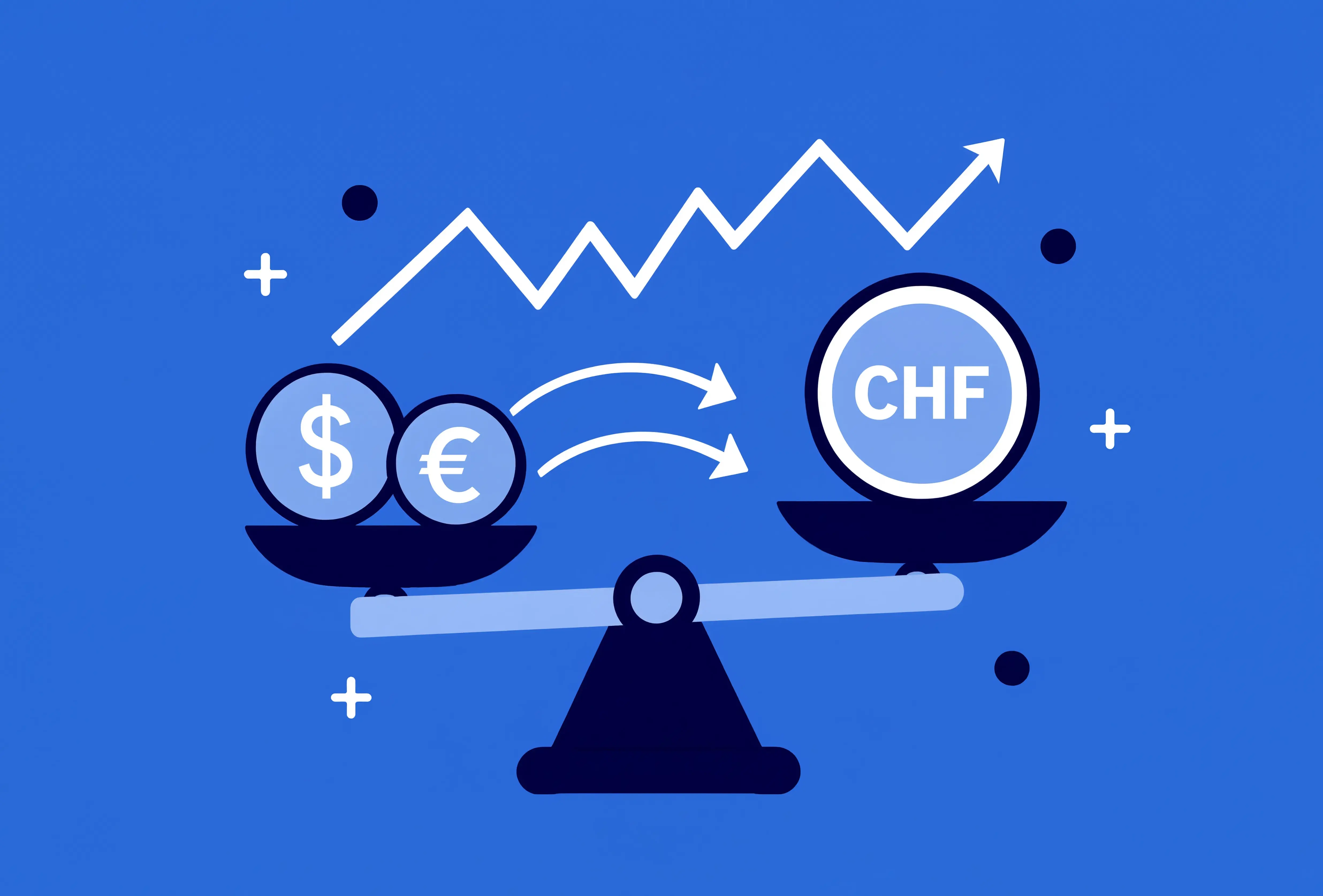
What matters to a Swiss investor isn't what a foreign asset is worth in its own currency, but what it's worth in francs, the currency you actually spend. When the franc strengthens, a foreign holding can rise in dollars and still lose ground in CHF.
What it is
Currency risk is the effect of exchange-rate moves on the CHF value of assets you hold in another currency. If you own a US index fund, your return has two parts: how the fund performs in dollars, and how the dollar performs against the franc. The second part is invisible on a US brokerage statement but very real once you convert back to spend the money at home.
Take USD 10,000 in an American fund, held for a year:
The fund gained 10% in dollars, yet in francs the position is worth less than you started with. The 10% gain was more than wiped out by an 11% fall in the dollar. That gap is currency risk, and nothing about the fund itself caused it.
Why it matters more for the franc
The franc is one of the world's strongest currencies, and over decades it has tended to appreciate against the dollar and the euro. In the early 1970s a US dollar bought over four francs; today it buys less than one. A Swiss investor holding foreign assets has therefore faced a steady, long-run headwind that a US or eurozone investor never sees in their home currency.
This doesn't make foreign investing a mistake, global diversification is still valuable, but it means a CHF investor should expect exchange rates to subtract from foreign returns over the long run more often than they add.
What you can do about it
Three broad responses, from cheapest to most active:
Accept it
Over long horizons, currency swings partly average out. Many diversified investors simply ride them.
Hedge it
CHF-hedged fund share classes strip out the currency move, for an ongoing cost, and you give up any gains too.
Tilt home
Hold a larger share in CHF assets, so more of your portfolio already sits in your spending currency.
Hedging isn't free: it carries a running cost and removes the upside as well as the downside, so it makes most sense for shorter horizons or bond-heavy holdings, where currency swings can dwarf the underlying return. For a long-term global equity portfolio, many Swiss investors leave equities unhedged and accept the currency exposure as part of diversifying.
Swiss note
A fund's trading currency isn't the same as its currency risk. A US-domiciled ETF priced in dollars but holding global companies exposes you to many currencies, not just the dollar. What matters is the currencies of the underlying assets, not the ticker's listing currency.
Key takeaways
- —Your real return is the asset's return plus the currency move, measured in the francs you spend.
- —A strong, appreciating franc has historically been a long-run headwind on foreign holdings.
- —Hedging removes the currency swing but costs money and cuts off the upside as well as the downside.
- —What counts is the currency of the underlying assets, not the currency a fund is priced in.