Compound Interest
How interest earned on interest makes savings grow faster over time, and why starting early matters more than the rate.
Key idea
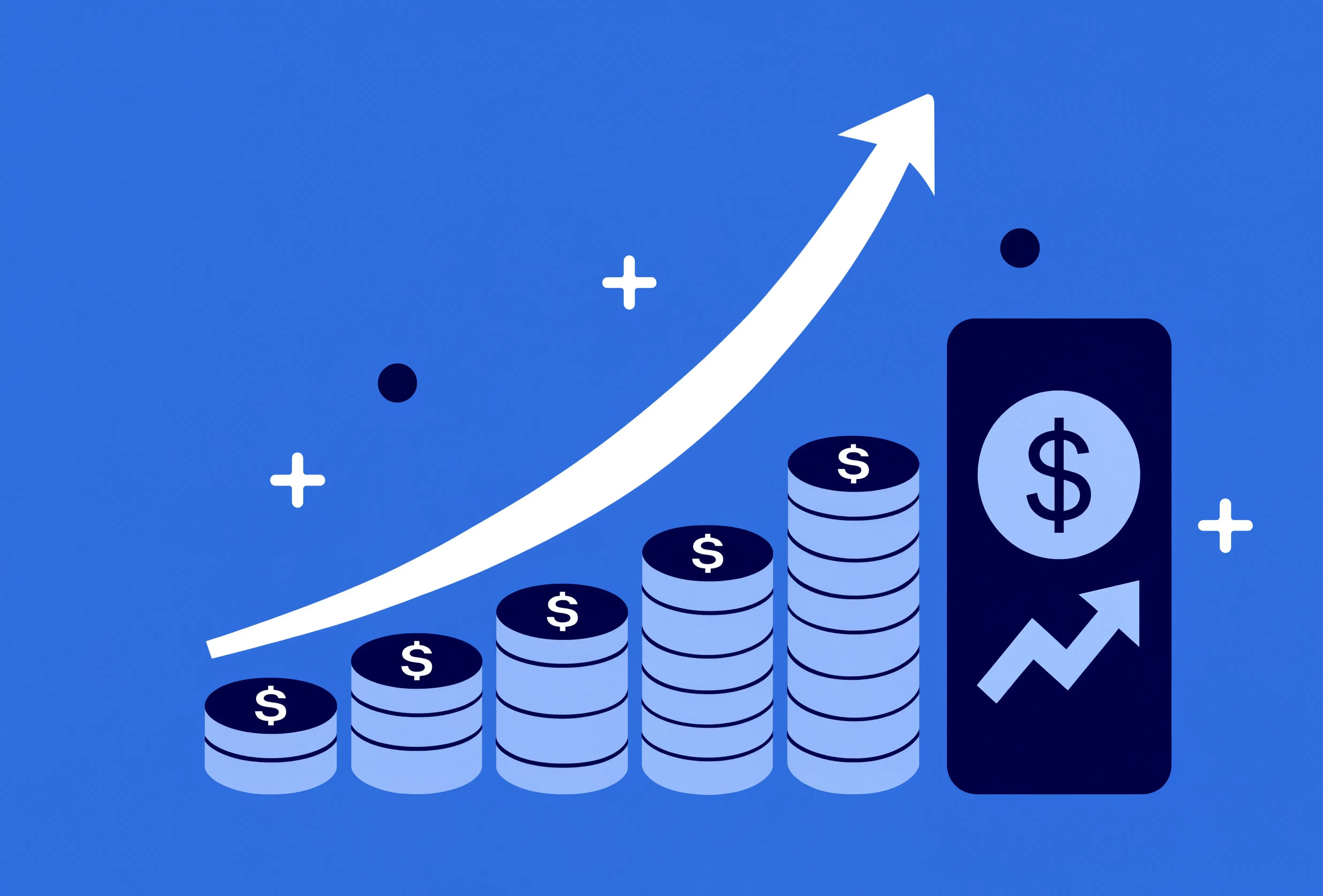
Compound interest is interest earning interest. Once interest starts generating more interest, growth stops being linear and begins to curve upward.
What it is
With simple interest you earn the same amount on your original money every year. With compound interest, each year's gain is added to the balance, so the next year you earn interest on a slightly larger sum. Earning interest on your interest is the whole idea and it's why savings grow faster the longer they're left alone.
CHF 10,000 at 5% per year, nothing added after the first deposit:
The gaps between the bars widen even though the rate never changes. Simple interest would reach just 25,000 over the same 30 years, the extra 18,000 is entirely interest compounding on itself.
How it works
- 1
Earn interest
Balance × rate. 10,000 × 5% = 500.
- 2
Add it to the balance
The gain compounds next year, not just the principal. 10,000 + 500 = 10,500.
- 3
Repeat on the larger sum
Each year's interest is a little bigger than the last. 10,500 × 5% = 525.
What drives it
Three levers, in rough order of how much they matter over a long horizon:
Time
The strongest lever. Because growth curves, extra years late in the timeline add the most.
Contributions
Money added along the way compounds too. Regular deposits often outweigh a higher rate.
Rate
Matters, but less than people expect and a higher rate usually means more risk.
This is why starting early beats waiting for a better return: beginning ten years sooner gives every franc a decade of extra compounding, and that head start is hard to catch by chasing a slightly higher rate later.
A note on frequency
Interest can be credited yearly, quarterly, or monthly. Compounding more often means interest starts earning its own interest a little sooner, so the final balance is slightly higher. The effect is real but small, the number of years matters far more than how often interest is added within each year.
The other direction
The same maths works against you just as reliably:
- —Inflation compounds against your balance. A 5% return with 2% inflation grows real wealth at closer to 3%.
- —Fees compound too, a yearly percentage quietly shrinks the balance every single year.
- —Debt runs the same curve in reverse. A credit-card balance compounds against you at rates far above any investment.
Swiss note
In Switzerland, interest and dividends count as taxable income, while capital gains on private assets are generally tax-free. A Pillar 3a account lets contributions compound in a tax-advantaged wrapper up to the annual cap.
Key takeaways
- —Compound interest means earning interest on your interest, not just your original sum.
- —Time is the strongest lever. Starting early beats chasing a higher rate.
- —Regular contributions compound alongside your returns and often matter more than the rate.
- —Fees, inflation and debt compound too, in the wrong direction.